Mount Etna Photography: Capturing Europe's Most Active Volcano Through a Fine Art Lens
There is a moment — usually around golden hour, when the Ionian Sea turns to liquid copper and the summit plume catches the last rays of Sicilian sun — when Mount Etna photography stops being a technical exercise and becomes something closer to a spiritual experience. I have stood on rooftops, crouched on black lava fields, and braced against wind gusts that nearly ripped my tripod from the basalt, all in pursuit of that one frame where fire meets sky. This is my complete guide to volcano photography in Sicily, distilled from years of chasing Etna's moods across every season and altitude.
If you have ever dreamed of photographing a living, breathing volcano — one that regularly sends columns of ash and red lava into the Mediterranean night — then this guide is for you. Whether you are planning an Etna photoshoot with a partner, scouting editorial locations, or simply want to bring home images that make people stop scrolling, everything I have learned is here.
1. Etna as a Photographic Subject: Drama, Scale, and Raw Power
Mount Etna is not a polite mountain. At 3,357 meters, it is the tallest active volcano in Europe and one of the most consistently active on the planet. Its silhouette dominates the entire eastern coastline of Sicily, visible from over a hundred kilometers on clear days. For a photographer, this means one extraordinary thing: the mountain is always in your frame, whether you want it or not.
That omnipresence is a gift. Unlike peaks you must trek to see, Etna inserts itself into street scenes, wedding portraits, coastal panoramas, and vineyard compositions with zero effort on your part. The challenge is not finding the volcano — it is doing justice to its scale.
What makes mount etna photography endlessly compelling is the volcano's refusal to stay the same. On any given week, Etna might be:
- Snow-capped and serene, a white crown against cobalt skies
- Smoking gently, a thin gray plume drifting east toward Calabria
- Erupting spectacularly, with fountains of lava painting the night sky orange
- Shrouded in cloud, revealing only its massive base like an iceberg's tip
Each of these moods demands a different approach, a different lens, a different emotional register. That is why I keep coming back. Etna is never finished teaching me.
"Etna is not a backdrop. It is a co-creator. Every image I make with the volcano is a collaboration between my vision and the mountain's mood that day."
2. Best Viewpoints for Etna Photography FROM Taormina
Taormina is, without exaggeration, the single greatest vantage point for photographing Mount Etna from a distance. The town sits on a cliff at roughly 200 meters above sea level, facing northwest toward the volcano, with the Ionian Sea completing the composition below. I have spent years cataloging viewpoints, and these are the ones I return to for my portfolio work.
Via Bagnoli Croce — The Painter's Walk
This elevated garden path on Taormina's northern edge offers an unobstructed panorama of Etna with lush Mediterranean vegetation in the foreground. Morning light here is extraordinary: the sun rises behind you, illuminating the volcano's eastern flank in warm amber while the town below remains in shadow. Bring a 70-200mm lens to compress the layers of rooftops, sea, and summit into a single painterly frame.
Piazza IX Aprile — The Iconic Terrace
The main square's open terrace delivers the classic Taormina-and-Etna composition. Tourists flock here for selfies, but arrive at dawn and you will have it to yourself. The checkered marble floor adds geometric interest to foreground compositions, and the San Giuseppe church tower frames Etna beautifully on the left.
Castelmola — The Eagle's Nest
Drive or hike ten minutes above Taormina to the tiny hilltop village of Castelmola, and Etna reveals its full majesty. From the ruined castle at the summit (roughly 530 meters), you see the complete volcanic cone from base to crater, with Taormina reduced to a terracotta ribbon below. This is my preferred location for dramatic wide-angle shots and for capturing Etna during eruptions, as the elevation reduces atmospheric interference.
Rooftop Terraces — The Secret Weapon
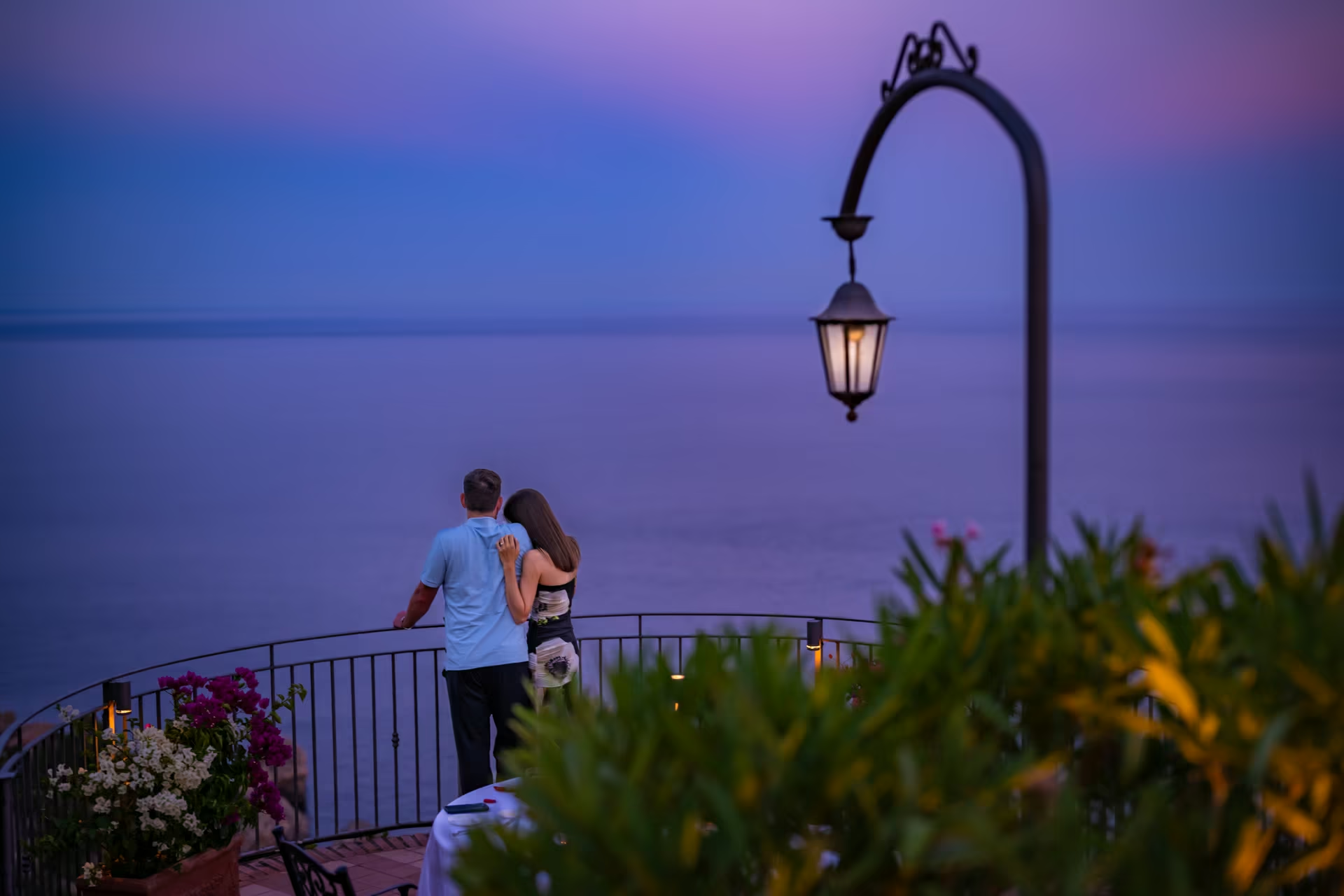
Several hotels and private residences in Taormina's historic center offer rooftop access with Etna views. I have shot engagement sessions, editorial campaigns, and personal fine art work from these terraces. The combination of terracotta tiles, wrought iron, and a smoking volcano is pure visual poetry. For details on how I use Taormina's layered architecture in my work, see my guide to Taormina photography locations.
Teatro Antico — Where History Meets Geology
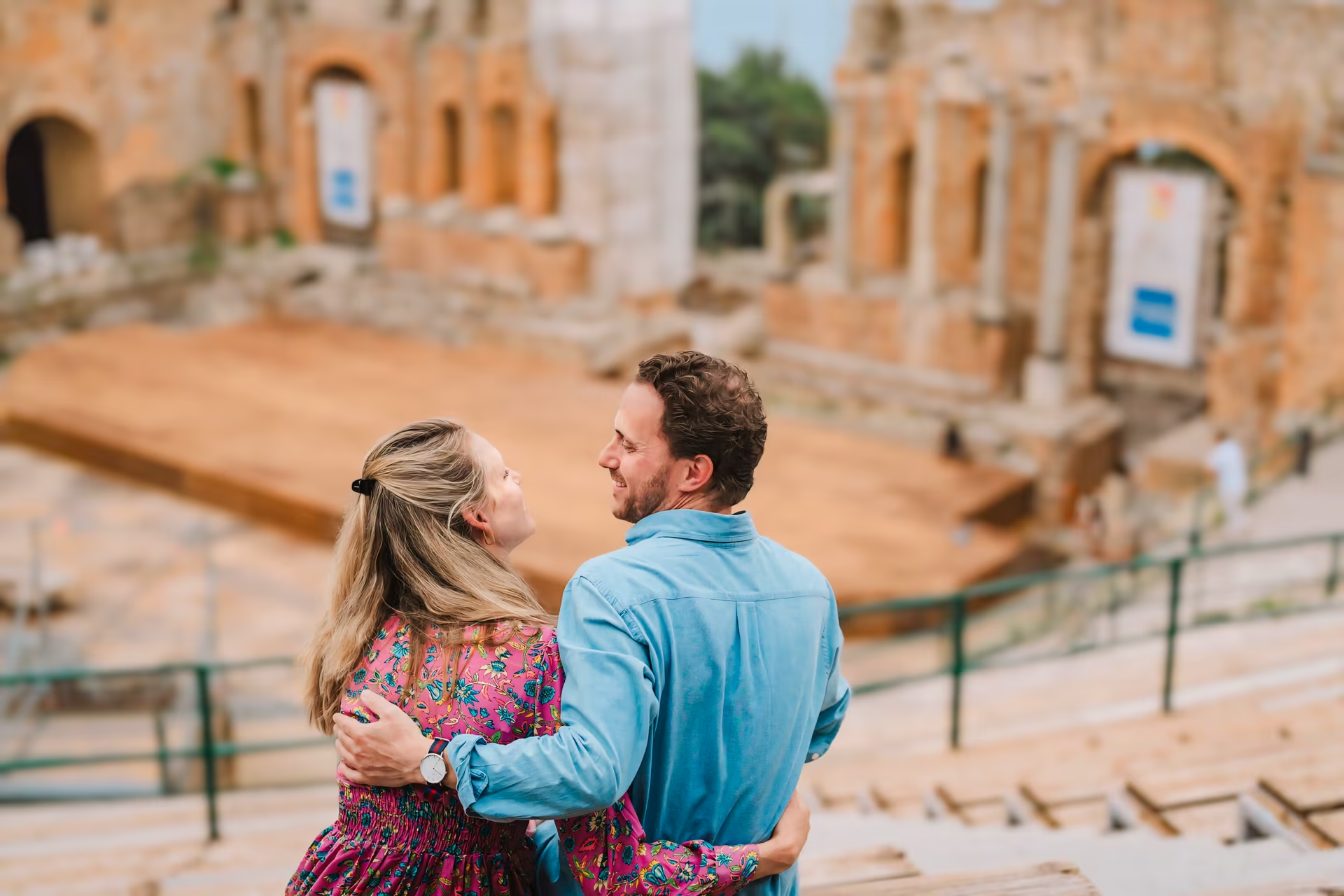
The ancient Greek-Roman theater frames Etna in its ruined arches — a composition so powerful that it has been painted, photographed, and filmed for centuries. Access requires a ticket, and tripods are technically restricted, but early entry and a monopod solve the problem. The contrast between 2,300-year-old stone and an active volcano is a visual metaphor that writes itself.
3. Going TO Etna: Shooting at Altitude (2,000m and Above)
Photographing Etna from Taormina is magnificent, but going to the volcano is a different experience entirely — raw, humbling, and slightly terrifying in the best way. When I take clients for an Etna photoshoot at altitude, I always brief them on what to expect.
Getting There
The southern approach via Rifugio Sapienza (1,923m) is the standard route. A cable car and 4x4 bus can take you to approximately 2,900 meters, where authorized guides lead treks toward the summit craters. For photography purposes, the 2,000-2,500 meter zone is the sweet spot — high enough for alien landscapes, low enough for reliable access.
What You Will Find
The terrain above 2,000 meters is another planet. Black and rust-colored lava fields stretch in every direction, punctuated by steam vents, sulfur deposits, and the occasional hardy plant forcing its way through a crack. The scale is disorienting: what looks like a small ridge might be a 50-meter wall of solidified lava.
| Feature | Altitude | Photography Value |
|---|---|---|
| Rifugio Sapienza parking | 1,923m | Base camp shots, cable car compositions |
| Silvestri Craters | 1,986m | Walk-in volcanic craters, wide-angle drama |
| Cable car summit station | 2,504m | Panoramic views, cloud inversions |
| Torre del Filosofo area | 2,920m | Extreme landscape, sulfur vents, summit proximity |
| Active summit craters | 3,300m+ | Guide-only, eruption proximity (restricted) |
My Approach at Altitude
I work fast and light above 2,000 meters. One body, two lenses (16-35mm and 70-200mm), a carbon fiber tripod, and a circular polarizer. The lava fields demand wide-angle treatment to convey their enormity, but a telephoto isolates the surreal textures — rippled pahoehoe flows, jagged aa lava, and vent openings that glow faintly with heat.
For more of my landscape and location work, browse the gallery.
4. Wedding and Couples Sessions with an Etna Backdrop
Here is a truth that surprises many of my clients: Etna makes one of the most dramatic backdrops in the world for couples photography. The volcano adds an element of raw, primal beauty that elevates a portrait session from "beautiful" to "unforgettable."
Why Etna Works for Couples
The symbolism is irresistible. A volcano is passion, intensity, enduring power — exactly the qualities you want associated with a love story. When I photograph a couple with Etna smoking behind them, the image carries an emotional charge that a sunset alone cannot deliver.
Location Options for Couples
From Taormina (accessible, elegant):
- Rooftop sessions with Etna and the sea
- Via Bagnoli Croce at golden hour
- Private villa terraces with panoramic views
On Etna itself (adventurous, dramatic):
- Silvestri Craters for an otherworldly feel
- Lava fields above Rifugio Sapienza
- Snow-covered slopes in winter for editorial contrast
I recently photographed a couple at the Silvestri Craters at sunset. She wore a flowing red dress against the black volcanic rock, and the wind caught the fabric at the exact moment Etna released a puff of white steam behind them. That image now hangs in their Milan apartment as a two-meter fine art print. Moments like that are why I do this work.
If you are considering a couples or engagement session with Etna, I would love to discuss the possibilities — explore my portfolio to see examples of this style.
5. Technical Challenges: Volcanic Haze, Altitude Light, and Wind
Volcano photography in Sicily comes with a unique set of technical problems. Here is how I handle each one.
Volcanic Haze
Etna regularly emits sulfur dioxide and water vapor, creating a persistent haze that softens contrast and shifts color toward yellow-blue. Solutions:
- Polarizing filter: Cuts haze by up to 50% and restores color saturation. Essential above 1,500 meters.
- Dehaze in post: Lightroom's Dehaze slider at +20 to +40 recovers detail without introducing artifacts.
- Shoot in RAW: Haze destroys JPEG shadow detail. RAW gives you three extra stops of recovery.
- Use haze creatively: Sometimes the atmospheric diffusion adds a dreamlike quality. Lean into it for fine art work.
Altitude Light
Above 2,000 meters, UV radiation intensifies dramatically. Shadows go blue-purple, highlights blow out faster, and skin tones shift cool. My adjustments:
- UV filter or lens hood: Reduces purple fringing on skin
- Expose for highlights: Recover shadows in post rather than trying to save blown whites
- White balance: Set manually to 5,800-6,200K rather than trusting auto, which overcorrects
Wind
Etna's summit zone is relentlessly windy. Gusts of 60-80 km/h are common above 2,500 meters. Practical advice:
| Problem | Solution |
|---|---|
| Tripod shake | Hang your camera bag from the center column for weight; use a ground-level spreader |
| Lens flare from volcanic dust | Keep a microfiber cloth in your chest pocket; clean front element every 10 minutes |
| Subject discomfort (couples sessions) | Schedule 45-minute shoots max; bring warm layers and a windbreak |
| Ash in gear | Use weather-sealed bodies; cover your bag; change lenses inside your jacket |
Pro tip: Volcanic grit is abrasive. If you see ash falling, protect your front element with a clear filter you do not mind replacing. A scratched $30 filter is better than a scratched $2,000 lens.
6. Seasonal Guide: Snow-Capped Winter vs. Smoking Summer
One of the most common questions I receive about mount etna photography is when to come. The honest answer: every season offers something extraordinary.
Winter (December - February)
Etna transforms into a snow-covered giant. The contrast between white summit snow, black mid-altitude lava, and the deep blue Mediterranean below is staggering. From Taormina, the volcano looks like a Japanese woodblock print — stark, elegant, and impossibly beautiful.
- Best for: Fine art landscape, editorial, dramatic contrast
- Challenge: Road closures above 1,800m; cable car may shut for storms
- Light: Low sun angle creates long shadows and warm tones even at midday
- Bonus: Snow on Taormina's rooftops (rare but magical — happened twice in the last decade)
Spring (March - May)
Wildflowers erupt across Etna's lower slopes. Fields of broom, orchids, and poppies create vivid color against the dark volcanic soil. The snow line retreats slowly, giving you dual-season compositions — flowers in the foreground, snow on the summit.
- Best for: Couples sessions, color-rich landscape, vineyard compositions
- Challenge: Unpredictable weather; afternoon clouds build fast
- Light: Soft and diffused, excellent for portraits
Summer (June - August)
Peak eruption season. Etna is most likely to produce visible lava flows and explosive paroxysms between June and September. Nights are warm enough for comfortable long-exposure sessions, and the lava glow against the dark sky is one of the most spectacular sights in European photography.
- Best for: Eruption photography, night long exposures, astrophotography with lava glow
- Challenge: Haze at its worst; midday light is harsh
- Light: Golden hour is long and warm; blue hour at 2,000m is electric
Autumn (September - November)
The vineyards on Etna's slopes turn gold and crimson. The DOC wine region that rings the volcano produces some of Italy's finest wines, and the harvest-season landscape is a photographer's paradise. Atmospheric clarity improves as summer haze lifts.
- Best for: Wine country editorial, atmospheric landscape, cultural storytelling
- Challenge: Rain increases in November
- Light: Rich and directional, with beautiful side-light on the volcano's ridges
7. Joanna Levit's Etna Stories: Lessons from the Volcano
The Eruption That Changed My Approach
In February 2024, Etna produced a paroxysmal eruption at 3:00 AM. I had been tracking seismic activity on the INGV website and had my gear packed by the door. Within thirty minutes, I was on the terrace of a friend's rooftop apartment, watching a fountain of lava rise 1,500 meters above the crater. The sky turned orange. The sea reflected the glow. I shot 400 frames in ninety minutes.
What I learned: preparation beats spontaneity. The photographers who capture eruptions are not lucky — they are ready. I now keep a dedicated "eruption kit" bag with a telephoto, tripod, remote shutter, and headlamp charged at all times.
The Couple Who Wanted Danger
A client from New York asked me to photograph their engagement session "as close to the crater as legally possible." We hired a certified volcanological guide, hiked to 2,900 meters, and shot in 40 km/h winds with sulfurous steam drifting across the frame. The resulting images — her hair whipping horizontally, his arm braced around her, the volcanic vent glowing amber behind them — are among the most powerful portraits I have ever created.
The lesson: when clients bring courage and trust, extraordinary things happen. That session is featured in my portfolio and remains one of the most requested styles.
The Day Etna Disappeared
Not every Etna shoot ends in drama. One November morning, I arrived at Castelmola for a landscape session to find the volcano completely hidden by cloud — not partially, not softly, but entirely gone. I almost packed up. Instead, I waited. At 10:47 AM, a gap opened in the cloud bank for exactly four minutes, revealing only the snow-covered summit floating above a sea of white. It looked like a volcanic island in the sky. That single image became a gallery exhibition piece and taught me that patience is the photographer's most underrated skill.
8. Frequently Asked Questions
What is the best time of day for Mount Etna photography?
Golden hour (the first and last hour of sunlight) delivers the most dramatic light on Etna's slopes. However, blue hour — the 30 minutes after sunset — is exceptional from Taormina, as city lights begin to glow while the volcano retains a deep purple silhouette. For eruption photography, full darkness between 10 PM and 4 AM is essential to capture lava glow.
Can I photograph Etna during an eruption safely?
Yes, from Taormina (25 km away) eruptions are perfectly safe to photograph and visually spectacular. If you want to photograph from the volcano itself during heightened activity, access above 2,500 meters may be restricted by civil protection authorities. Always check the INGV Catania bulletins before planning a summit trip.
Do I need a guide for an Etna photoshoot at altitude?
Above 2,920 meters (Torre del Filosofo), a certified volcanological guide is mandatory by law. Below that altitude, you can explore independently, but I strongly recommend a guide regardless — they know the terrain, the weather patterns, and the fastest routes to the most photogenic features. For client sessions, I always arrange professional guide support.
What camera gear do I recommend for volcano photography in Sicily?
My recommended kit for a dedicated Etna photography trip:
| Item | Purpose |
|---|---|
| Full-frame mirrorless body (weather-sealed) | Dynamic range for haze recovery; dust protection |
| 16-35mm f/2.8 | Lava field landscapes, night sky with lava glow |
| 70-200mm f/2.8 | Compressed summit details, eruption close-ups from distance |
| Circular polarizer (77mm or your filter size) | Haze reduction, sky saturation |
| Carbon fiber tripod | Light enough for altitude hikes, stable in wind |
| Remote shutter release | Long exposures without vibration |
| Lens cleaning kit + spare clear filter | Volcanic grit protection |
Can VanSky Studio arrange a private Etna photoshoot?
Absolutely. I offer private photography experiences that combine Taormina's rooftop viewpoints with an Etna altitude session — a full day that captures both the refined elegance of the town and the raw power of the volcano. Couples, families, editorial clients, and solo travelers are all welcome. Visit my contact page or explore the gallery to see what is possible.
Final Thoughts
Mount Etna photography is not just about capturing a mountain. It is about engaging with a force of nature that has been reshaping this island for half a million years. Every eruption, every snowfall, every shifting plume of steam creates a landscape that has never existed before and will never exist again. As a photographer based in Taormina, I have the extraordinary privilege of watching this show unfold daily from my doorstep — and I never tire of it.
If this guide has sparked something in you, I hope you will come to Sicily and see Etna for yourself. Bring your camera. Bring your patience. And be ready for the mountain to surprise you, because it always does.
Explore more of my Sicilian photography work in the VanSky Studio portfolio, or read my full guide to Taormina photography locations for additional shooting spots across this extraordinary town.
Joanna Levit is the creative director and lead photographer at VanSky Studio in Taormina, Sicily. With over a decade of experience capturing luxury weddings, editorial campaigns, and fine art portraits across the Mediterranean, his work has been featured in leading international publications. His philosophy: every photograph should feel like a painting you'd hang on your wall.