What Is Fine Art Wedding Photography? The Philosophy Behind VanSky Studio's Signature Style
Fine art wedding photography is not simply a filter or a preset — it is a philosophy, a deliberate choice to treat every frame as a work of art rather than a document of events. As a fine art photographer working from Taormina, Sicily, I have spent over a decade refining an approach that prioritizes emotion, composition, and timeless beauty over checklists and candid snapshots. If you have ever looked at a wedding photograph and felt it belonged in a gallery rather than an album, you were looking at fine art wedding photography — and this article will explain exactly what that means, how it differs from other styles, and why it might be the right choice for your celebration.
At VanSky Studio, the question I hear most often from couples researching photographers is deceptively simple: what is fine art photography style, and how will it change the way our wedding looks? The answer requires more than a sentence. It requires an understanding of art history, the physics of light, the grammar of visual composition, and above all, a conviction that a wedding photograph should outlast trends. This is that explanation.
1. Defining Fine Art Photography: Art-First, Emotion-Driven, Deliberately Composed
The term "fine art" has been used in visual disciplines since the Renaissance to distinguish works created primarily for aesthetic and intellectual purpose from those made for utility. When we apply this lens to wedding photography, the distinction becomes powerful: a fine art wedding photography approach means that every image is conceived as an artistic statement first and a record of events second.
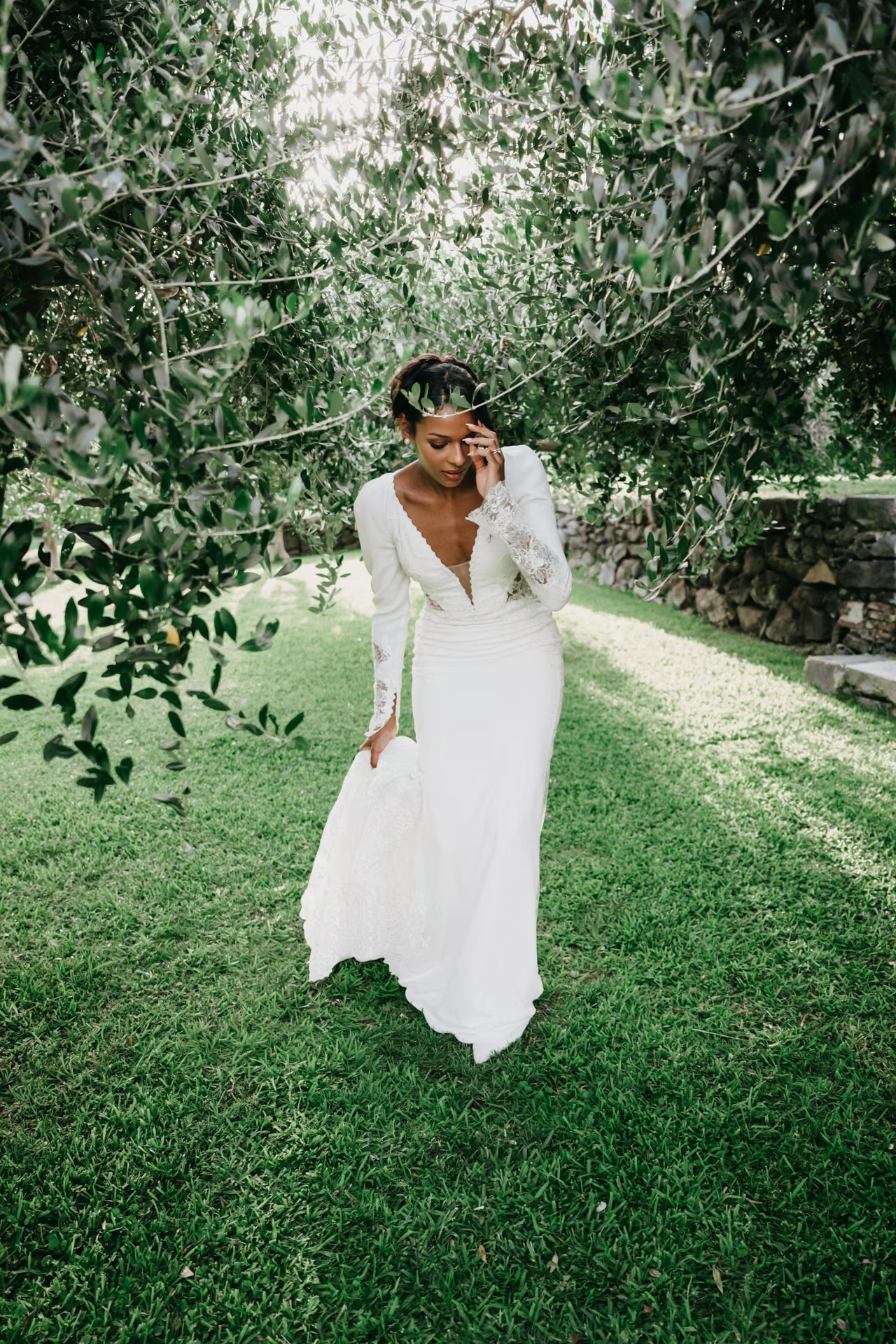
This does not mean moments are missed. Quite the opposite — it means moments are elevated. A traditional photographer might capture the father-daughter dance from the side of the dance floor at eye level. A fine art photographer studies the architecture of the room, identifies how the chandelier light falls across the floor, waits for the precise second when the father's hand rests on his daughter's shoulder, and shoots from an angle that places their silhouettes against a luminous background. The event is the same. The intention is entirely different.
Three pillars define the fine art approach:
- Intentional composition — every element within the frame is considered, from the negative space above a subject's head to the line created by a trailing dress on stone steps.
- Emotional resonance — the goal is to evoke a feeling in the viewer that transcends the specific moment, the way a Vermeer interior makes you feel stillness even though you were not there.
- Timeless visual language — fine art images avoid trendy color grading, extreme saturation, or effects that date quickly. They reference the tonal qualities of classical painting and analog film.
"A photograph is not taken, it is made." — Ansel Adams
Adams was speaking about landscape work, but his principle applies perfectly to fine art wedding photography. The photographer is not a passive observer with a camera. The photographer is an artist making deliberate decisions about light, placement, tone, and mood — decisions that begin long before the shutter opens.
2. Fine Art vs. Traditional vs. Photojournalistic: A Clear Comparison
One of the most common sources of confusion for couples is the overlap between photography styles. Here is a direct comparison that clarifies where fine art sits in relation to the two other dominant wedding photography approaches:
| Aspect | Traditional | Photojournalistic | Fine Art |
|---|---|---|---|
| Primary goal | Complete documentation | Storytelling through candid moments | Artistic expression and emotional beauty |
| Posing | Directed, formal group shots | Minimal — observe and capture | Guided but natural — sculpted moments |
| Lighting | On-camera flash, available light | Available light, no interference | Carefully studied natural light, shaped with reflectors or off-camera sources |
| Composition | Centered subjects, standard framing | Reactive, photojournalistic angles | Architectural, painterly, deliberate negative space |
| Color palette | Saturated, high-contrast | True-to-life, documentary tones | Muted, film-inspired, gallery-ready |
| Post-production | Basic correction | Minimal editing, authentic feel | Extensive tonal work, color harmony, skin retouching |
| Ideal for | Families wanting classic poses | Couples wanting raw, unscripted energy | Couples wanting images that feel like art |
| Art reference | Studio portraiture | Photojournalism (Henri Cartier-Bresson) | Painting (Caravaggio, Vermeer, Monet) |
The critical difference is intent. A photojournalist reacts to what unfolds. A traditional photographer follows a shot list. A fine art photographer envisions the final image and orchestrates light, environment, and moment to realize that vision — while remaining sensitive enough to capture the spontaneous beauty that every wedding naturally produces.
Most couples do not want exclusively one style. At VanSky Studio, my approach is rooted in fine art but incorporates documentary moments throughout the day. The ceremony, the toasts, the dancing — these are captured as they happen. But the portraits, the details, the quiet in-between moments — these are where the fine art philosophy fully emerges.
3. The Visual Language: Film-Inspired Tones, Negative Space, and Architectural Framing
Every fine art photographer develops a visual vocabulary — a set of recurring aesthetic choices that give their body of work coherence and recognizability. At VanSky Studio, my visual language draws from three primary sources: the tonal qualities of medium-format film, the compositional principles of Renaissance and Baroque painting, and the architectural geometry of Mediterranean landscapes.
Film-Inspired Tones
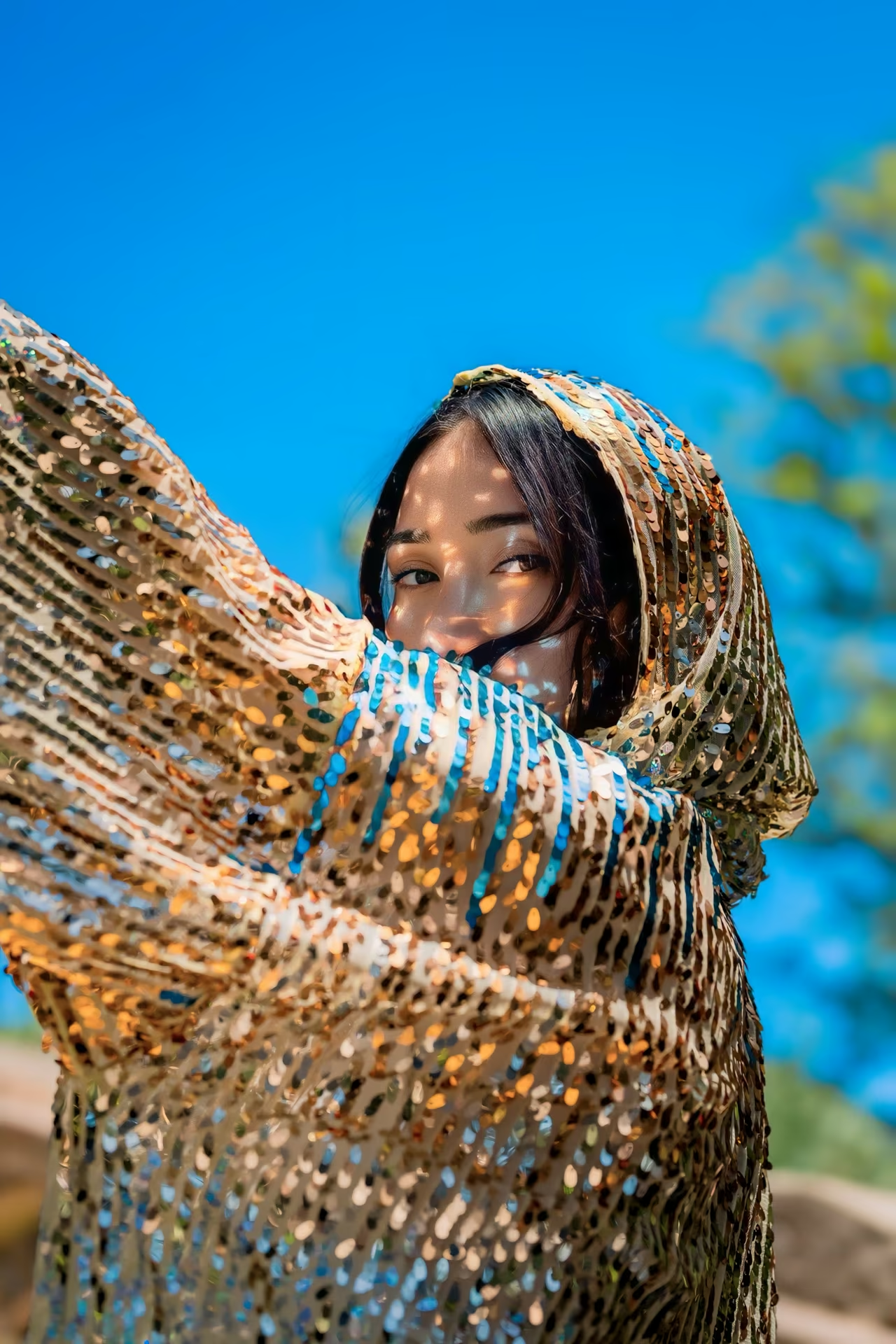
Before digital photography existed, the finest wedding and editorial work was shot on medium-format film stocks like Kodak Portra 400, Fuji Pro 400H, and Ilford HP5. These emulsions rendered skin with a luminous warmth, held highlight detail with extraordinary grace, and produced shadow tones that felt rich rather than muddy. The "film look" is not nostalgia — it is a tonal standard that has proven timeless across decades.
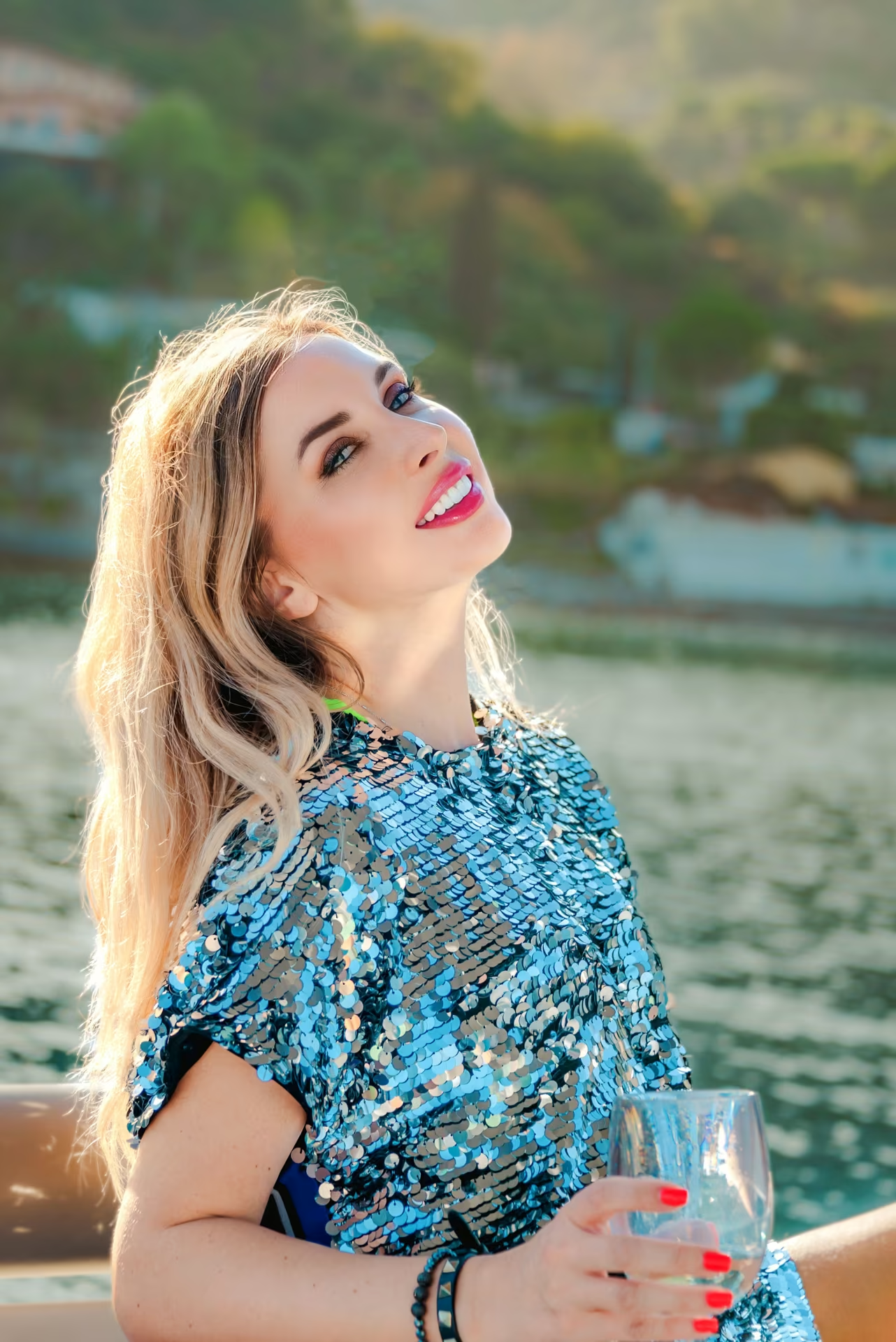
My post-production process begins with this tonal foundation. Skin tones are warmed toward peach and honey rather than orange. Highlights roll off gently rather than clipping to white. Shadows retain detail and carry a subtle coolness that creates depth. The result is a palette that feels elevated without feeling artificial — a quality you can see throughout the VanSky wedding gallery.
Negative Space
In Western art, negative space — the empty or minimal area surrounding a subject — has been used since at least the Japanese ma concept influenced Impressionism in the 1870s. In fine art wedding photography, negative space serves a critical purpose: it gives the eye room to rest and directs attention to the subject with almost magnetic force.
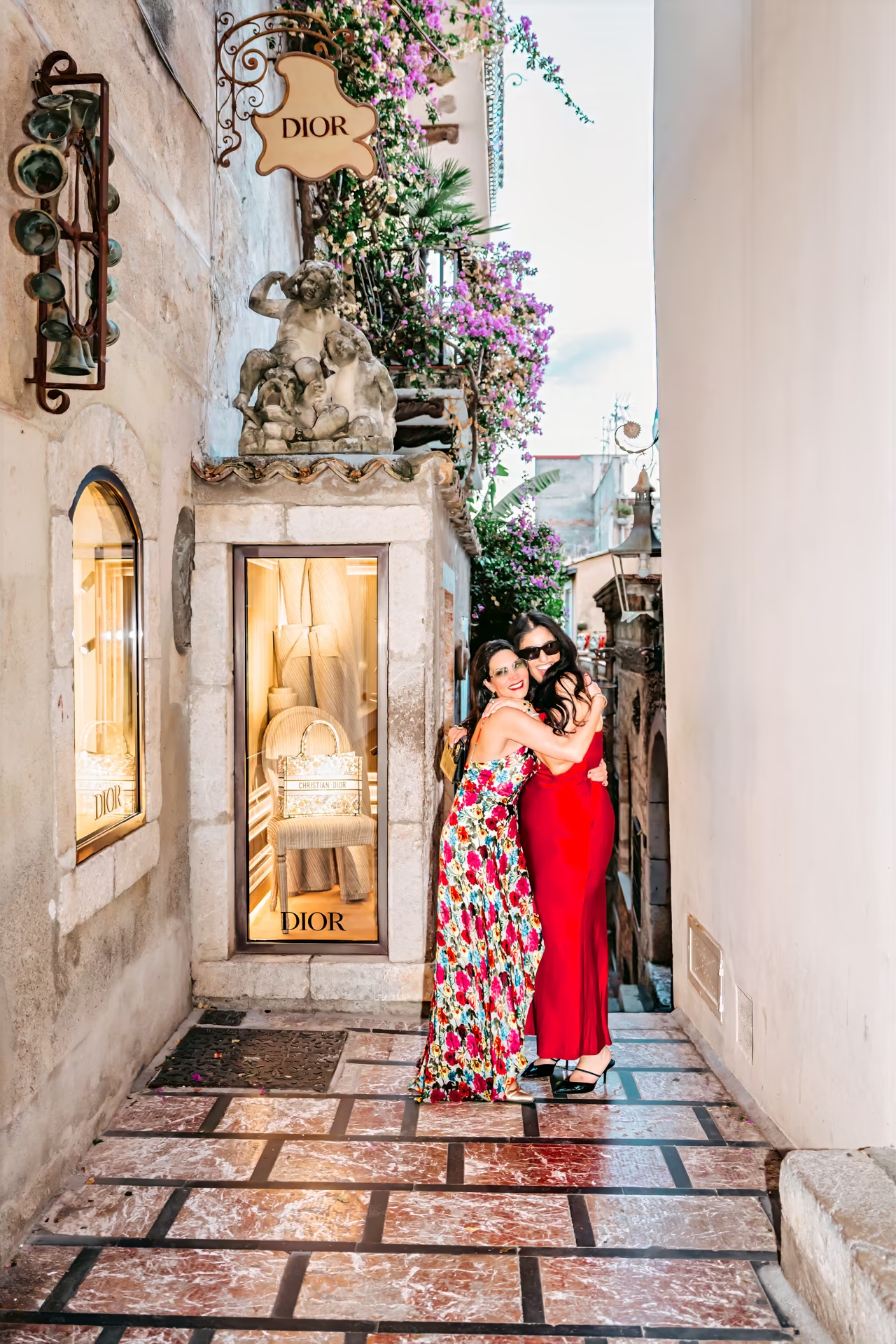
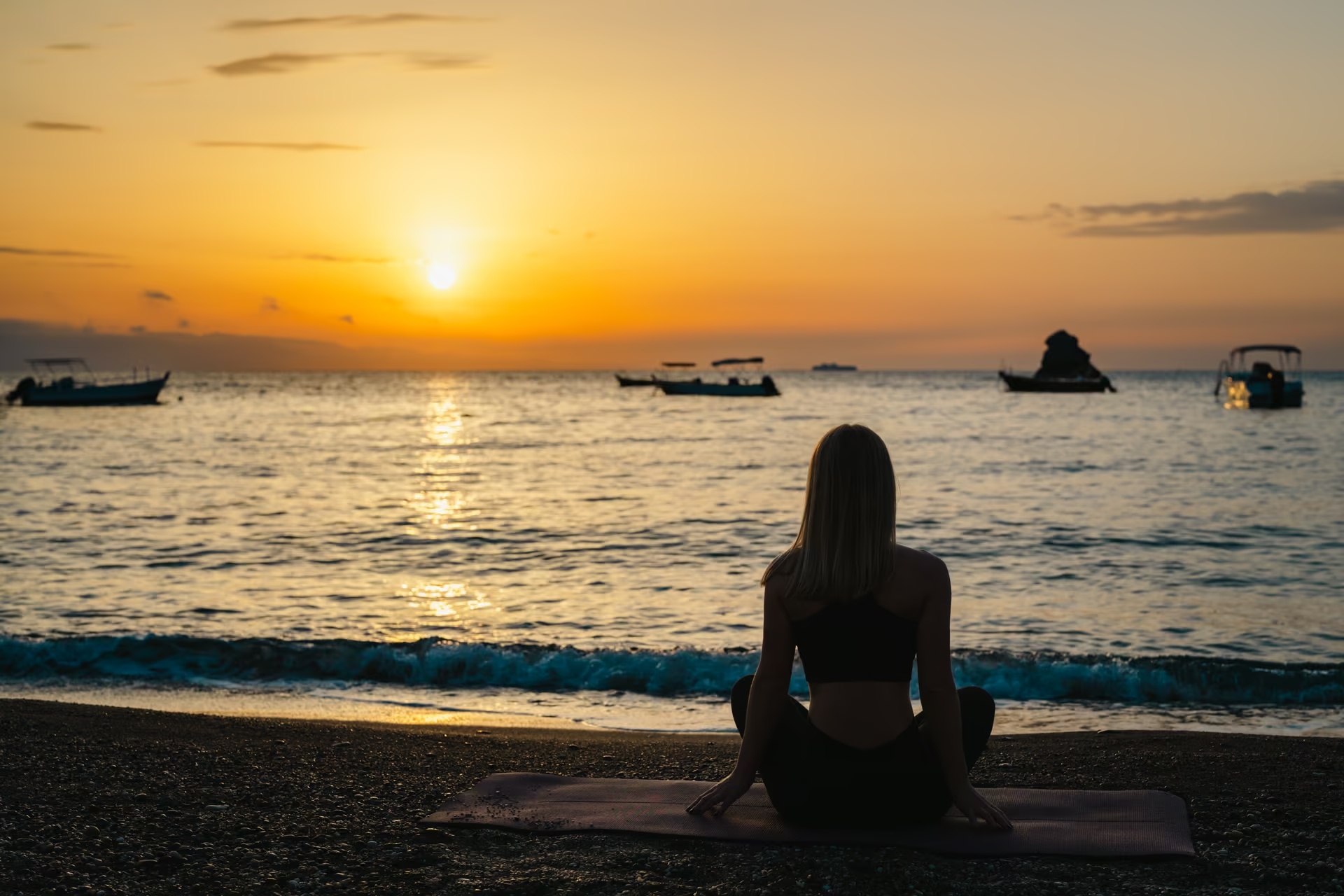
A bride standing alone in a vast cathedral, small against towering stone columns. A couple walking down a Taormina alley, the ancient walls stretching above them into a sliver of blue sky. These compositions use emptiness as an active element, not a deficiency. They create images that breathe.
Architectural Framing
Taormina is, without exaggeration, one of the most architecturally rich small towns in Europe. Every street offers arches, colonnades, balustrades, and staircases that function as natural frames. I use these structures obsessively — a doorway becomes a border, a colonnade becomes leading lines, a staircase becomes a diagonal that draws the eye to the couple at its center. This is where location knowledge and fine art vision intersect, and it is one of the reasons I chose to base my practice in Sicily.
4. How Joanna Levit Developed the VanSky Aesthetic
My path to fine art wedding photography was not linear. I studied visual arts before I ever picked up a camera professionally, and my earliest influences were painters rather than photographers — Caravaggio's chiaroscuro, where a single candle could carve a face from darkness; Monet's understanding that light is never one color but an infinite conversation between warm and cool; Edward Hopper's ability to make ordinary spaces feel profoundly emotional through composition and shadow.
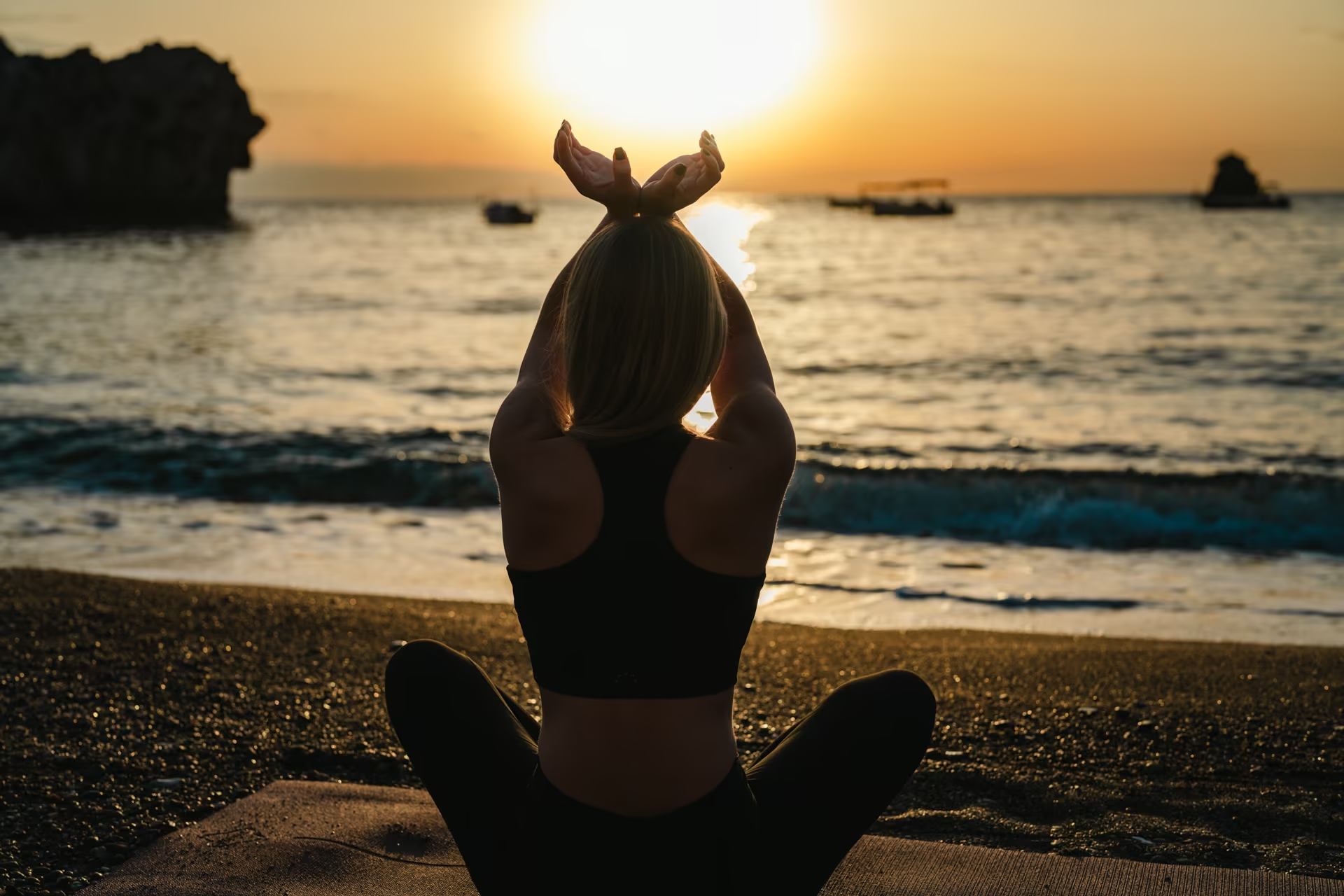
When I began photographing weddings, I brought these references with me. My first major stylistic decision was to abandon on-camera flash entirely. Flash creates a flat, frontal light that erases dimension — the exact opposite of what Caravaggio spent his career mastering. Instead, I learned to read natural light the way a painter reads a canvas: where is the source? What is its quality — hard or diffused? What color temperature does it carry? Where do the shadows fall, and what do they reveal?
This obsession with natural light led me to a second realization: the location is not a backdrop; it is a co-author of the image. When I shoot at a cliff-side terrace overlooking the Ionian Sea, the location's geometry, its light behavior at different hours, its textures and tones — all of these become active compositional elements. This is why I know the best photography locations in Taormina at an almost architectural level, having studied how light moves through each space across every season.
The VanSky aesthetic crystallized around 2018 when I committed fully to a film-inspired tonal palette, medium-format-style framing, and a compositional approach that treats every image as though it might hang on a gallery wall. That commitment has not wavered since.
5. The Role of Post-Production in Fine Art Photography
A common misconception about fine art photography is that the look is achieved primarily in post-production — that it is, essentially, a set of Lightroom presets applied over conventional images. This fundamentally misunderstands the process.
Post-production in fine art wedding photography is the final 20% of a vision that was 80% realized in-camera. If the light was wrong, the composition was careless, or the moment was not there, no amount of editing will create a fine art image. What post-production does is refine and harmonize what was already captured with intention.
My editing workflow involves several stages:
- Culling and sequencing — selecting the strongest frames and arranging them into a narrative arc that tells the story of the day.
- Global tonal correction — establishing the film-inspired color palette: warm skin tones, gentle highlight rolloff, rich but not crushed shadows.
- Local adjustments — dodging and burning specific areas to guide the viewer's eye, exactly as a darkroom printer would have done with an enlarger and cardboard masks.
- Skin refinement — subtle frequency-separation retouching that preserves texture while smoothing imperfections. The goal is skin that looks natural and luminous, never plastic.
- Color harmony — ensuring that every element in the frame exists within a cohesive palette. A distracting neon exit sign in the background of a ceremony shot, for example, is toned down so it does not compete with the bride's veil.
This process typically requires 30 to 45 minutes per hero image — the signature portraits and artistic compositions that define a fine art wedding gallery. Documentary moments from the reception receive lighter treatment, usually 2 to 5 minutes each, focused on tonal consistency rather than deep retouching.
The result is a collection of images that feel unified, intentional, and timeless — a quality you can explore across the VanSky fine art gallery.
6. Is Fine Art Right for Your Wedding?
Fine art wedding photography is not for everyone, and that is perfectly fine. Choosing the right style depends on what you value most in your wedding images and how you plan to display and revisit them over the years. Here are some honest considerations:
Fine art may be ideal for you if:
- You want images that feel like gallery prints — pieces you will frame and display prominently in your home for decades.
- You value visual beauty and emotional atmosphere over comprehensive documentation of every moment.
- You appreciate a muted, timeless color palette over bright, saturated, trendy looks.
- You are comfortable with gentle direction during portrait sessions — being guided into flattering light and compositions.
- Your venue has strong architectural or natural beauty that can be used as a compositional element.
Fine art may not be the best fit if:
- Your top priority is having every single guest photographed at every table.
- You prefer a completely hands-off, purely documentary approach with zero posing.
- You love bold, high-contrast, heavily saturated color work.
- You want your photos delivered within a few days (fine art editing requires time).
Most couples who choose VanSky Studio have already seen work in the portfolio and felt an immediate emotional response — a sense that these images are different, that they carry weight and permanence. If you felt that response, fine art is almost certainly right for you.
7. VanSky Studio as a Case Study in Fine Art Wedding Photography
Rather than speak abstractly, let me illustrate the fine art approach through a real wedding I photographed at a private estate above Taormina.
The couple — a London-based architect and a Milanese art curator — had chosen the venue specifically for its 17th-century courtyard with a baroque fountain and views of Mount Etna. They told me during our planning call that they wanted their images to feel like "stills from a Visconti film." That single reference gave me an entire visual framework.
Pre-ceremony: I arrived three hours early to study the light. The courtyard faced east, meaning the ceremony space would be in open shade by late afternoon — soft, even, and cool-toned. But the western loggia would catch the last golden light at exactly the time we had scheduled portraits. I planned the timeline around this light.
Ceremony: Shot with two bodies — one wide to capture the architectural context, one tight for emotional close-ups. I used the courtyard's arched colonnade as a natural frame, positioning myself so the couple stood within an arch with Etna visible through the gap. Documentary approach, no direction, but deliberate positioning on my part.
Portraits: Twenty-five minutes in the golden loggia. I directed gently — "walk toward each other slowly, look at each other, not at me" — creating movement that felt organic within a carefully chosen setting. The warm directional light sculpted their faces with the kind of chiaroscuro that Caravaggio would have recognized. These became the hero images of the gallery.
Details: The rings on a weathered stone balustrade. The invitation suite arranged on raw linen. The bride's shoes against terracotta tile. Each detail shot was composed with the same intentionality as a portrait — considered lighting, deliberate negative space, film-inspired tones.
The delivered gallery contained 487 images across 12 hours of coverage. Of those, approximately 60 were deep fine art compositions — the kind of images that the couple later printed at 30x40 inches and hung in their Milan apartment. The remainder were documentary coverage edited to the same tonal standard but captured in a more reactive, photojournalistic manner.
This balance — fine art vision applied to the full arc of a wedding day — is the VanSky Studio signature.
8. Frequently Asked Questions About Fine Art Wedding Photography
What is fine art photography style in simple terms?
Fine art photography style treats every photograph as a deliberate artistic creation rather than a casual capture. It emphasizes intentional composition, natural light, muted film-inspired color palettes, and emotional atmosphere. The goal is to produce images that feel timeless and gallery-worthy — closer to paintings than snapshots. At its core, it is the difference between taking a photo and making one.
How is fine art wedding photography different from editorial wedding photography?
Editorial photography borrows its aesthetic from fashion magazines — dramatic posing, bold styling, and high-production setups. Fine art wedding photography shares editorial's emphasis on visual impact but tends toward softer, more organic compositions. Fine art is less about creating a fashion moment and more about capturing an emotional truth within a beautiful frame. There is overlap, and many fine art photographers (myself included) incorporate editorial elements, but the philosophical root is different.
Do fine art photographers still capture candid moments?
Absolutely. A skilled fine art photographer captures candid moments throughout the entire wedding day — laughter during speeches, tears during vows, chaotic joy on the dance floor. The difference is that even candid shots benefit from the photographer's trained eye for composition and light. I may not direct a candid moment, but I have already positioned myself where the light and background create the strongest possible frame for that moment when it unfolds.
How many images should I expect from a fine art wedding?
At VanSky Studio, a full-day wedding (10-12 hours of coverage) typically yields 400 to 550 delivered images. This is deliberately fewer than some traditional photographers deliver, because every image in a fine art gallery must meet a high standard. I would rather deliver 450 exceptional photographs than 900 mediocre ones. Quality and curation are central to the fine art wedding photography philosophy.
How far in advance should I book a fine art wedding photographer in Taormina?
For peak season weddings in Sicily (May through October), I recommend booking 10 to 14 months in advance. Fine art wedding photographers tend to limit the number of weddings they accept per year — at VanSky Studio, I cap my calendar to ensure every couple receives the time and creative energy their day deserves. You can begin a conversation through the contact page or explore availability for your date at any time.
Final Thoughts
Fine art wedding photography is, at its heart, a belief that your wedding images deserve the same creative intention that goes into a painting, a film, or a piece of architecture. It is a refusal to settle for "good enough" documentation when something extraordinary is possible. It is an understanding that light, composition, and emotion — when handled with skill and reverence — produce photographs that will mean more to you in thirty years than they do today.
That is what I pursue with every wedding I photograph at VanSky Studio. Not perfection in some clinical sense, but the kind of beauty that stops you mid-step when you walk past a framed print on your wall — the kind that makes you feel, every single time, exactly what you felt on that day.
If this philosophy resonates with you, I would love to hear about your plans. Browse the VanSky portfolio to see the work in full, read more about my approach and background, or simply reach out. Every great wedding gallery begins with a conversation.
Joanna Levit is the creative director and lead photographer at VanSky Studio in Taormina, Sicily. With over a decade of experience capturing luxury weddings, editorial campaigns, and fine art portraits across the Mediterranean, his work has been featured in leading international publications. His philosophy: every photograph should feel like a painting you'd hang on your wall.