Golden Hour in Taormina: A Photographer's Obsession with Sicily's Most Beautiful Light
There is a reason I moved my entire life to this cliff-perched town on the eastern coast of Sicily. Golden hour in Taormina is not merely good light — it is a full-body experience, a collision of geography, atmosphere, and ancient stone that produces something I have never found anywhere else in the Mediterranean. After more than a decade of chasing light across three continents, I can say with certainty: the golden hour here is the single greatest natural advantage a photographer can have.
This guide is everything I wish someone had handed me on my first trip. Exact sunset Taormina times for every month, the locations that catch fire at specific hours, and the technical reasoning behind why this small Sicilian town produces light that makes other photographers whisper "How did you get that?"
What Makes Taormina's Light Special
Taormina sits at 37.85°N latitude, 15.29°E longitude, clinging to a limestone cliff 206 meters above the Ionian Sea on Sicily's eastern coast. These three facts — latitude, elevation, and orientation — create a photographic trifecta that is almost absurdly generous.
The eastern exposure. Unlike most of the Amalfi Coast or the western Sicilian shore, Taormina faces due east across the Ionian Sea. Morning light arrives unobstructed across hundreds of kilometres of open water. There is no landmass, no atmospheric pollution corridor, no industrial haze between you and the sunrise. The light is clean.
The sea mirror. The Ionian Sea at dawn becomes a vast reflector panel. Light bouncing off the water fills shadows from below, creating a natural fill light that softens contrast without sacrificing dimension. This is the same principle portrait photographers pay thousands to replicate with reflectors in a studio — Taormina provides it at a geological scale.
The mountain shadow play. Monte Tauro (398m) rises directly behind the town, and the slopes of Mount Etna (3,357m) dominate the western horizon. As the sun descends in the evening, these mountains create a graduated shadow curtain that sweeps across Taormina's rooftops. The effect is a natural spotlight: buildings on higher terraces catch the last golden rays while the streets below fall into cool blue shade. The contrast is extraordinary.
The stone palette. Taormina's buildings are predominantly warm-toned limestone, terracotta, and weathered stucco in shades of cream, ochre, and sienna. These surfaces absorb the blue wavelengths of golden hour light and reflect back an intensified warm spectrum. A white marble building looks golden at sunset; a Taormina building looks like it is made of light itself.
The combination produces what I call the Taormina glow — a warm, dimensional, impossibly flattering light that wraps around subjects from multiple angles. It is the reason I built VanSky Studio here, and it is the reason clients fly from London, Dubai, and New York specifically for this light.
Golden Hour Times in Taormina: Month-by-Month Table
The single most important piece of data for any photographer visiting Taormina. These times are calculated for 37.85°N, 15.29°E (Taormina centro) and represent the best time for photos in Taormina throughout the year. All times are in local time (CET in winter, CEST in summer).
Morning Golden Hour
| Month | Sunrise | Golden Hour Start | Golden Hour End | Duration |
|---|---|---|---|---|
| January | 07:15 | 07:15 | 07:52 | 37 min |
| February | 06:55 | 06:55 | 07:34 | 39 min |
| March | 06:18 | 06:18 | 07:00 | 42 min |
| April | 06:28* | 06:28 | 07:14 | 46 min |
| May | 05:52 | 05:52 | 06:42 | 50 min |
| June | 05:35 | 05:35 | 06:30 | 55 min |
| July | 05:46 | 05:46 | 06:40 | 54 min |
| August | 06:10 | 06:10 | 07:00 | 50 min |
| September | 06:36 | 06:36 | 07:20 | 44 min |
| October | 07:02 | 07:02 | 07:42 | 40 min |
| November | 06:33 | 06:33 | 07:11 | 38 min |
| December | 07:05 | 07:05 | 07:42 | 37 min |
\April times shift with CEST (daylight saving) clocks forward.*
Evening Golden Hour & Sunset
| Month | Golden Hour Start | Sunset | Golden Hour End (civil twilight) | Duration |
|---|---|---|---|---|
| January | 16:20 | 16:58 | 17:26 | 66 min |
| February | 16:52 | 17:30 | 17:58 | 66 min |
| March | 17:18 | 17:58 | 18:26 | 68 min |
| April | 18:50* | 19:32 | 20:02 | 72 min |
| May | 19:18 | 20:02 | 20:34 | 76 min |
| June | 19:38 | 20:24 | 20:58 | 80 min |
| July | 19:34 | 20:18 | 20:52 | 78 min |
| August | 19:00 | 19:42 | 20:14 | 74 min |
| September | 18:12 | 18:52 | 19:20 | 68 min |
| October | 17:24 | 18:02 | 18:30 | 66 min |
| November | 15:52 | 16:30 | 16:58 | 66 min |
| December | 15:50 | 16:28 | 16:56 | 66 min |
\April times shift with CEST (daylight saving) clocks forward.*
Key insight: Evening golden hour in Taormina is consistently longer than morning golden hour — often by 20–30 minutes. This is because the western mountains create an earlier effective sunset, extending the low-angle golden phase while the sun is still technically above the astronomical horizon. In June, you get nearly 80 minutes of usable evening golden light. That is extraordinary.
Pro tip: These times shift by ±5 minutes depending on your exact elevation in town. The Greek Theatre (elevation ~220m) catches light approximately 4 minutes longer than Piazza IX Aprile (elevation ~195m) each evening.
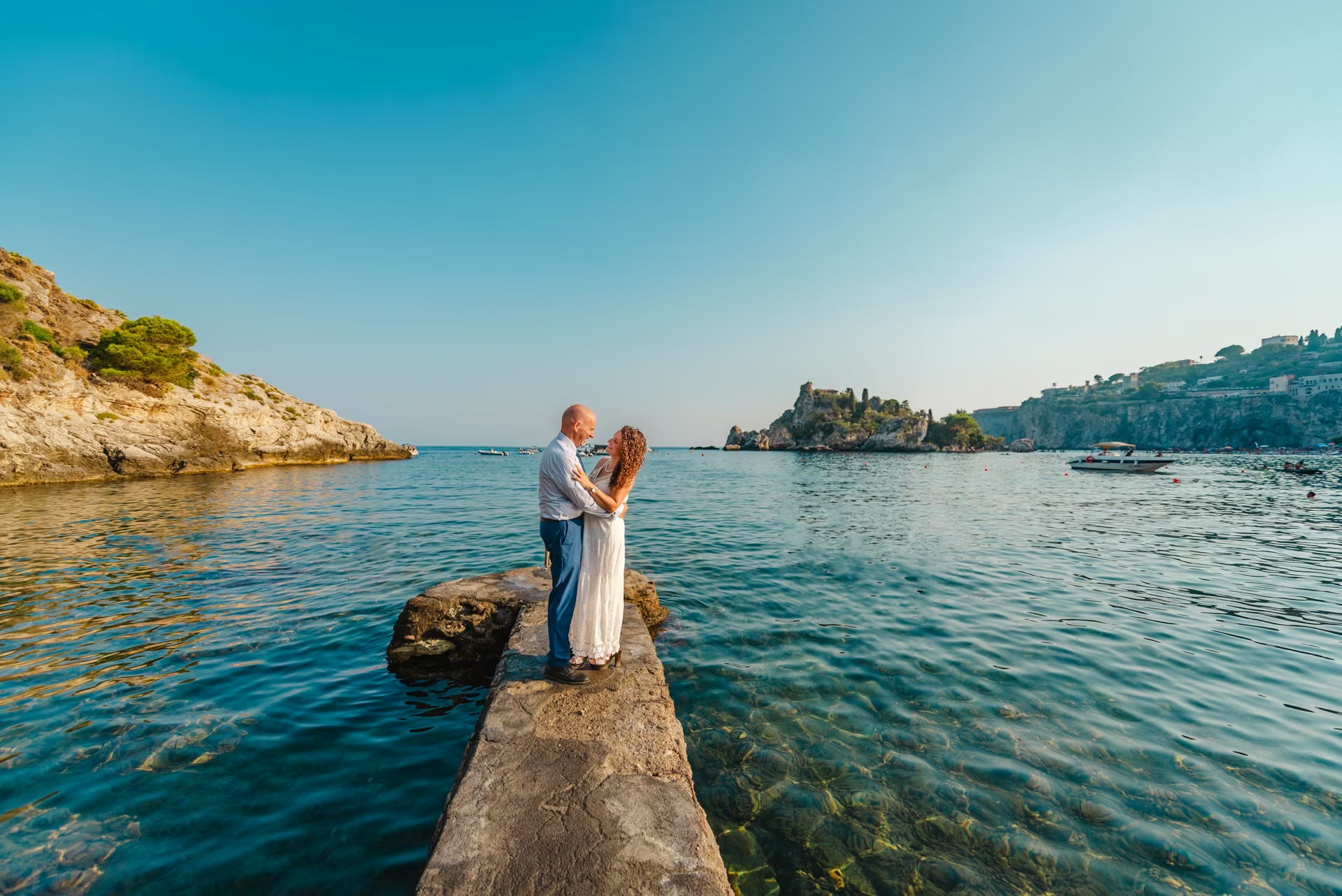
Best Locations Matched to Time of Day
Not every location in Taormina works at every hour. After thousands of sessions, I have mapped which spots ignite at which times. This is the core of understanding Taormina light photography.
Morning Light Locations (Sunrise to 09:00)
| Location | Best Months | Why It Works |
|---|---|---|
| Isola Bella Beach | Apr–Sep | First light hits the island directly; calm morning sea creates mirror reflections |
| Via Teatro Greco (eastern wall) | Year-round | Ancient stone catches horizontal morning rays; dramatic shadow lines |
| Giardini della Villa Comunale | Mar–Oct | Subtropical foliage backlit by low eastern sun; dreamy bokeh |
| Mazzarò Cable Car | May–Aug | Descending into light; the coastline below glows copper |
Morning sessions in Taormina require commitment — you will often be the only photographer awake. But the best time for photos in Taormina is frequently before 07:00, when the streets are empty and the light is pure.
Evening Light Locations (Golden Hour to Sunset)
| Location | Best Months | Why It Works |
|---|---|---|
| Piazza IX Aprile | Year-round | West-facing terrace; warm light floods the piazza and the sea beyond glows |
| Greek Theatre | Year-round | Etna catches the last light while the theatre falls into blue shadow — iconic |
| Corso Umberto (western end) | Oct–Mar | Low winter sun shoots directly down the street; golden corridor effect |
| Via Guardiola Vecchia | May–Sep | Elevated viewpoint; unobstructed western horizon for sunset silhouettes |
For couples sessions and portrait work, I almost always recommend the evening golden hour. The light is warmer, the duration is longer, and the town's social energy creates a vibrant backdrop.
Blue Hour: The Forgotten Magic Hour in Taormina
Most photographers pack up after sunset. That is a mistake.
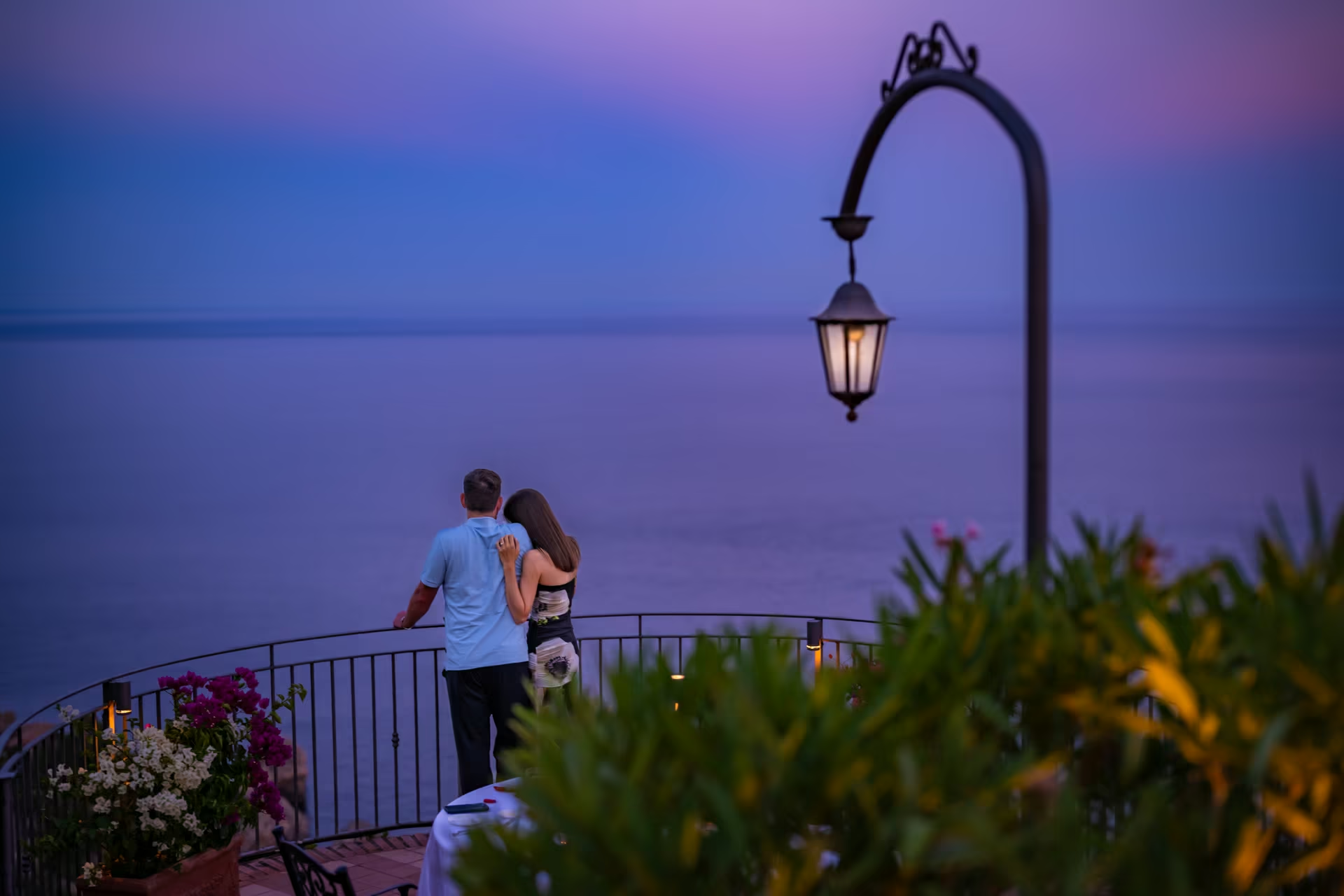
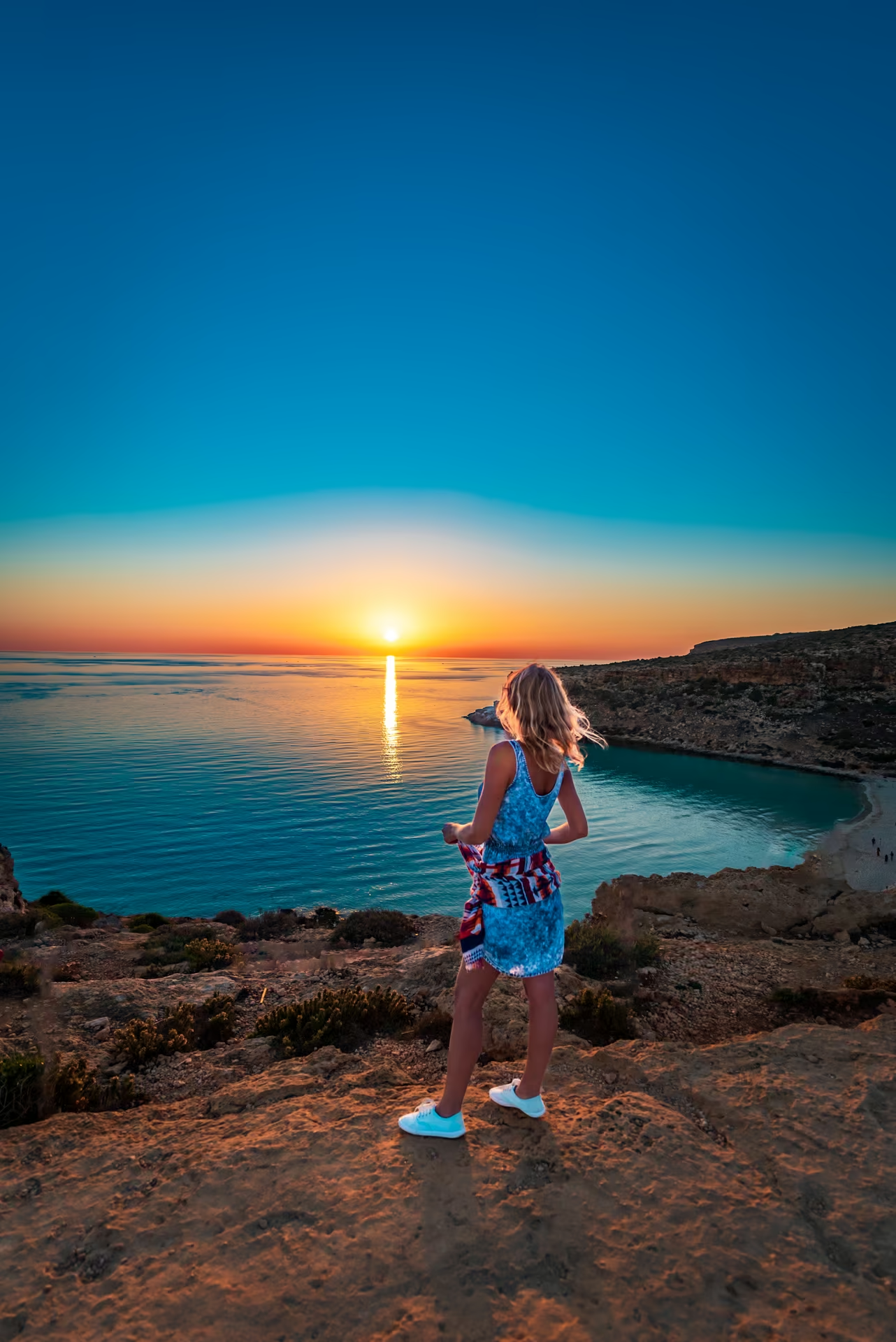
Blue hour — the 20–35 minutes of deep cobalt twilight after the sun drops below the horizon — is when Taormina transforms from a sunlit postcard into something cinematic. The warm artificial lights of restaurants and street lamps switch on while the sky holds a saturated indigo. The contrast between warm tungsten and cool ambient creates a colour tension that is impossible to replicate in post-processing.
In Taormina, blue hour is particularly powerful because of Etna's silhouette. The volcano's profile against a gradient sky — deep blue at the zenith fading to peach at the horizon — is one of the most recognizable images in Mediterranean photography.
Technical notes for blue hour:
- White balance: Set to 3800–4200K for maximum blue/warm contrast
- ISO: 800–1600 on a modern full-frame sensor is clean enough
- Aperture: f/2.0–f/2.8 for environmental portraits; f/8 for cityscapes
- Tripod: Essential for anything longer than 1/30s; I use a carbon fibre travel tripod on Taormina's cobblestones
- Duration: Approximately 25 minutes in summer, 20 minutes in winter — shorter than most people expect
Blue hour in Piazza IX Aprile with the Chiesa di San Giuseppe lit from below is, in my professional opinion, one of the top ten urban photography moments in all of Europe.
Overcast Days: Why They're Secretly Perfect for Portraits
I see it constantly: visitors check the weather forecast, see clouds, and cancel their photography plans. This is exactly wrong.
Overcast skies are the world's largest softbox. Cloud cover diffuses sunlight evenly across the entire sky dome, eliminating harsh shadows, reducing contrast ratio, and producing skin tones that are remarkably flattering. In a studio, I would pay thousands for a modifier that produces this quality of light. In Taormina, the weather provides it for free roughly 60–80 days per year.
Overcast conditions in Taormina are particularly effective because:
- The stone architecture provides contrast. Without direct sun, the warm stone tones become the dominant colour in the frame. Subjects wearing cool-toned clothing pop against the warm backgrounds.
- Etna disappears. When the volcano is hidden by cloud, the eye is drawn entirely to the human subject. Compositions become simpler, more intimate.
- Colour saturation increases. Without specular highlights blowing out surfaces, colours in foliage, tiles, and painted doors become richer and more saturated.
- You can shoot at any hour. No need to chase golden hour. Noon looks identical to 16:00. This gives you enormous scheduling flexibility for wedding photography or editorial campaigns where timing is constrained.
"The worst light is no light. Overcast is beautiful light with a different personality." — a principle I repeat to every client who apologises for the clouds.
Seasonal Light Guide: Taormina Through the Year
Each season in Taormina delivers a distinct photographic character. Understanding this rhythm is essential for planning any serious Taormina light photography project.
Spring (March–May): The Soft Awakening
Spring light in Taormina is gentle, slightly cool, and extraordinarily even. The sun's angle increases rapidly — from 42° at solar noon in March to 68° in May — which means shadow lengths change noticeably week to week. Bougainvillea begins blooming in April, adding magenta and coral accents to compositions. The air carries moisture from spring rains, creating a subtle atmospheric haze that softens distant elements and adds depth to wide shots.
Best for: Engagement sessions, editorial fashion, fine art landscapes.
Summer (June–August): High Drama
The sun reaches its maximum altitude of 75.6° at the solstice, producing short, punchy shadows at midday and the longest golden hours of the year. Summer evenings in Taormina are legendary — the light lingers, the sea turns molten, and the town buzzes with energy. However, midday light from 11:00–15:00 is harsh and overhead. I schedule no outdoor work during those hours in summer.
Best for: Sunset ceremonies, beach sessions at Isola Bella, dramatic Etna-backdrop images. Book your Taormina photography experience for June or July if you want maximum golden hour duration.
Autumn (September–November): Warm Nostalgia
My personal favourite season for light. The sun drops back to lower angles, but summer's warmth lingers in the atmosphere. October light in Taormina has a golden-amber quality that is warmer than spring but softer than summer. Crowds thin, morning fog occasionally rolls in from the sea, and the reduced humidity sharpens distant details. Etna often shows early snow while the town below remains in shirtsleeves — the contrast is magnificent.
Best for: Couples photoshoots, intimate weddings, portfolio building.
Winter (December–February): Intimate & Cinematic
Winter sun in Taormina barely exceeds 30° at noon, casting long shadows all day. The light is cooler — a clean, silvery gold rather than summer's amber — and the low angle creates textured sidelighting on every surface. Tourist numbers drop to a fraction of summer levels, meaning you have iconic locations virtually to yourself. Rain days alternate with brilliant clear skies. The dramatically low sunset Taormina times (16:28 in December) mean golden hour begins in the mid-afternoon — perfect for session work without exhausting early mornings or late evenings.
Best for: Architectural photography, moody editorial, elopements with an intimate atmosphere.
Nathan's Personal Favourite Light Moments
After twelve years, certain moments still stop me mid-stride.
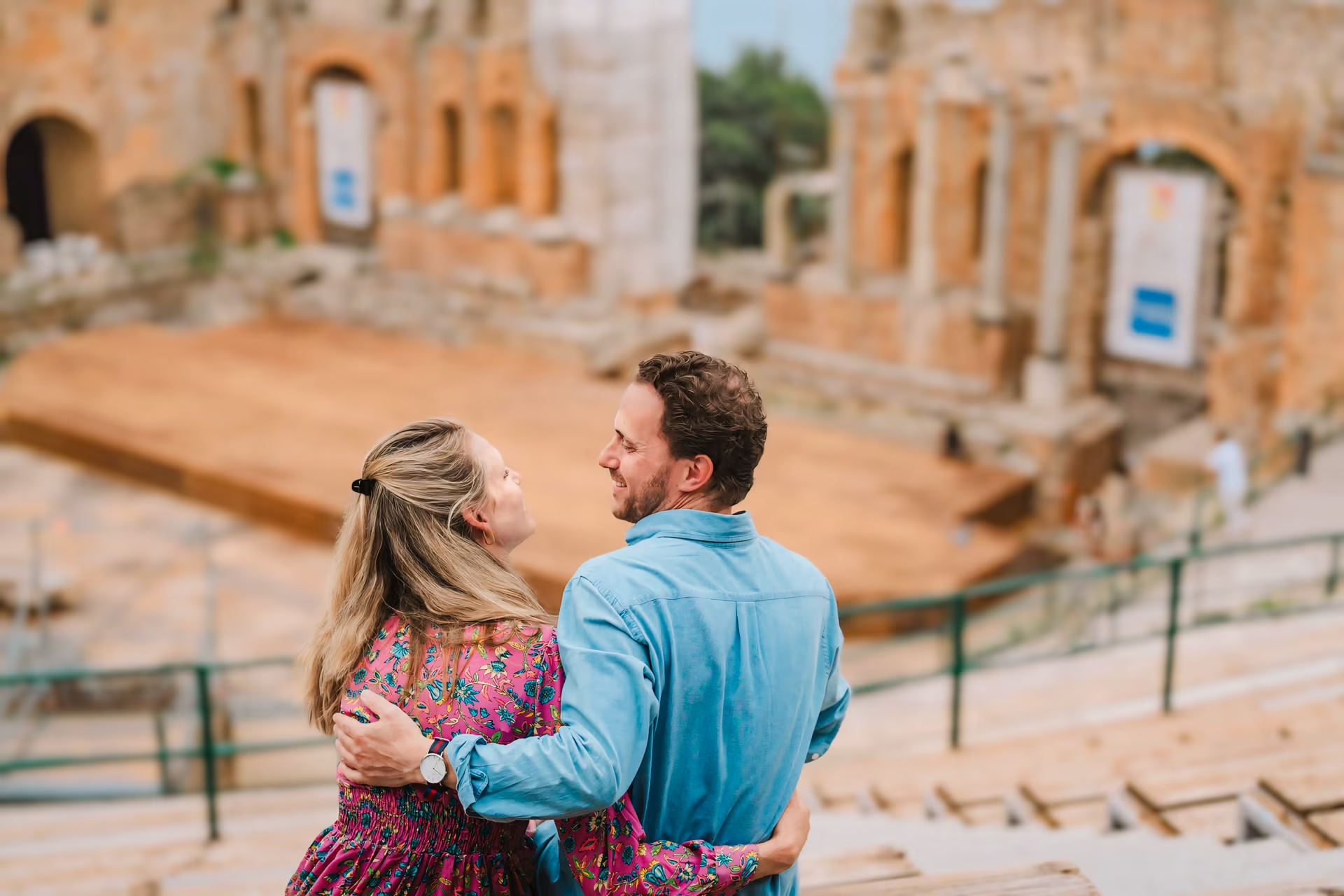
The January sidelight at the Greek Theatre. At 07:30 on a clear January morning, the sun is barely 8° above the horizon and it shoots horizontally through the eastern arches of the Teatro Antico. The ancient columns cast shadows that stretch the entire length of the cavea. For exactly eleven minutes, the stone glows a deep amber and the shadow lines are razor-sharp. I have photographed this more than forty times and it still makes my hands shake on the shutter release.
June sunset from Via Guardiola Vecchia. There is a specific bend in this narrow path above the town where, in late June, you can see the sun setting behind Etna's northern flank while the entire Bay of Naxos turns to liquid copper below. The foreground is a cascade of terracotta rooftops dotted with satellite dishes and laundry lines — the real Sicily, not the postcard. I shot one of my most-shared portfolio images from this spot.
October fog at Isola Bella. Perhaps twice a season, an autumn morning brings a low sea fog that hugs the beach at Mazzarò while the sun burns through from behind. Isola Bella becomes a ghostly silhouette. The light is diffused, ethereal, almost Japanese in its minimalism. I keep a weather alert on my phone specifically for these conditions.
The five-minute window at Piazza IX Aprile in December. At approximately 16:15 in mid-December, the winter sun drops to the precise angle where it passes between two buildings on the western side of the piazza and floods the entire square with unobstructed golden light. Five minutes later, it disappears behind the roofline. If you are standing in the right spot with your camera ready, you will capture something that looks like a Renaissance painting. If you are ordering a coffee, you will miss it entirely. I have missed it. I have caught it. The difference is planning.
Camera Settings & Technical Recommendations
For those who want to maximise the golden hour Taormina experience, here are my baseline settings:
| Scenario | Aperture | Shutter | ISO | White Balance |
|---|---|---|---|---|
| Portraits, early golden hour | f/2.0–f/2.8 | 1/200–1/500 | 100–200 | 5600K |
| Portraits, late golden hour | f/1.8–f/2.8 | 1/125–1/250 | 200–400 | 5200K |
| Landscapes, golden hour | f/8–f/11 | 1/30–1/125 | 100 | 5500K |
| Blue hour portraits | f/2.0 | 1/60–1/125 | 800–1600 | 4000K |
| Blue hour cityscapes | f/8 | 1–4 sec | 200–400 | 3800K |
Lens recommendations: A 35mm f/1.4 is the ultimate Taormina lens — wide enough for the narrow streets, fast enough for blue hour, and the focal length matches the town's intimate scale. I pair it with an 85mm f/1.4 for portraits and a 16–35mm for the Greek Theatre and panoramic viewpoints.
Frequently Asked Questions
What is the best time of day for photos in Taormina?
The best time for photos in Taormina depends on your subject. For portraits and couples sessions, the evening golden hour (starting 60–80 minutes before sunset) offers the warmest, most flattering light. For architecture and landscapes, the first 45 minutes after sunrise produce clean, directional light with no crowds. For atmospheric, moody images, blue hour (20–35 minutes after sunset) is unbeatable.
When is golden hour in Taormina in summer?
In June and July, golden hour in Taormina begins around 19:30–19:38 and extends through sunset at approximately 20:18–20:24, with usable warm light continuing until nearly 21:00 CEST. Morning golden hour starts at sunrise (approximately 05:35–05:46) and lasts about 50–55 minutes.
Is Taormina good for photography in winter?
Absolutely. Winter is one of the most underrated seasons for Taormina light photography. The low sun angle creates dramatic sidelighting all day, crowds are minimal, and the sunset Taormina times in December and January (around 16:28–16:58) mean you can shoot golden hour in the comfortable mid-afternoon. Snow-capped Etna adds a spectacular backdrop that is unavailable in summer.
Where is the best sunset viewpoint in Taormina?
Piazza IX Aprile offers the most accessible and dramatic sunset view, with an unobstructed western horizon over the rooftops and sea. For a more secluded experience, Via Guardiola Vecchia above the town provides an elevated perspective. The Greek Theatre offers the iconic Etna-at-sunset composition but requires a ticket and closes before sunset in winter months.
Should I hire a local photographer who knows the light?
If you want images that go beyond tourist snapshots, working with a photographer who has spent years learning Taormina's light patterns is a significant advantage. The difference between standing in the right spot at the right minute and being fifty metres away can be the difference between an ordinary photo and an extraordinary one. At VanSky Studio, every session is planned around the specific light conditions of your date and time. You can explore available photography experiences here.
Final Thought
I have photographed in Santorini, Positano, Provence, and the Scottish Highlands. Beautiful places, all of them. But golden hour in Taormina has something none of them quite match — a convergence of warm stone, eastern sea light, volcanic drama, and ancient atmosphere that makes every frame feel like it was painted rather than photographed. It is not just good light. It is the right light, in the right place, at the right time.
If you are planning a trip to Sicily and care about photography — whether for a wedding, a couples session, or simply your own portfolio — build your itinerary around the light table above. Arrive early. Stay late. And trust me: the golden hour here is worth every minute of lost sleep.
Nathan Cohen is the creative director and lead photographer at VanSky Studio in Taormina, Sicily. With over a decade of experience capturing luxury weddings, editorial campaigns, and fine art portraits across the Mediterranean, his work has been featured in leading international publications. His philosophy: every photograph should feel like a painting you'd hang on your wall.